Describe the Periodic Trends for Ionization Energy.
Periodic Trends Electronegativity Trends. The process in which an atom becomes an ion is called ionization.

Periodic Trends Ionization Energy Explained With Exceptions Study Chemistry With Us Youtube
Rationale for the Periodic Trends in Ionization Energy.
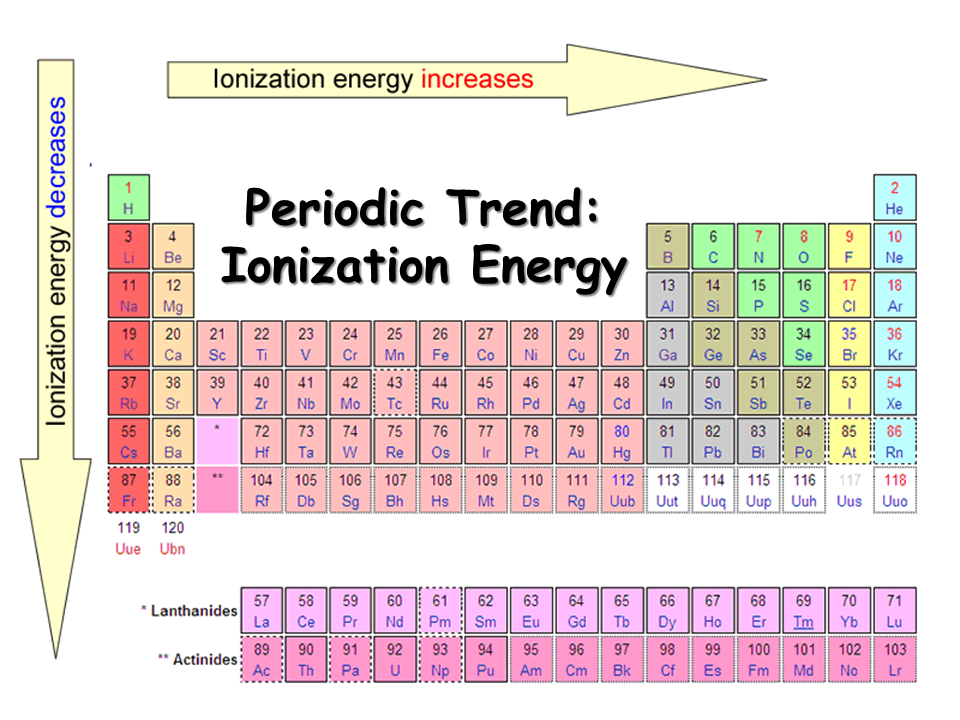
. We can explain this by considering the nuclear charge of the atom. When you go down a group there is a decline in the ionization energy. The radiation may give their outer electrons enough energy to escape from the attraction of the positive nucleus.
Describe the trend in atomic radius as the atomic number increases across a period. When an electron is removed the atom gets a _____ charge. This stronger attraction makes it more difficult to remove electrons.
Who are the experts. Periodic Trends Ionization Energy Trend Wksh 3 Directions. We review their content and use your feedback to keep the quality high.
B Describe the periodic trend of ionization energy as you move from left to right in a period row Atomic radii decreases as you move across a period left to right. Moving from left to right across the periodic table the ionization energy for an atom increases. Try a couple of other periods.
Choose the best explanation for why the alkali metals have lowest El. Ionization energy trend in a group. Describe the trend in ionization energy as the atomic number increases across a period.
View the full answer. Decreases from top to bottom. A The electrons are closer to the nucleus so they are held less tightly B After the loss of an electron the alkali earth metals have a stable noble gas configuration C They have a smaller radius so the atom is more likely to give.
It may occur when atoms are exposed to high levels of radiation. Electronegativity can be understood as a chemical property describing an atoms ability to. This is because the.
It tends to decrease down a column of the periodic table because the number of electron shells is. Ionization energy trend in the period. Experts are tested by Chegg as specialists in their subject area.
Overall trend in the ionization energy across the period you chose. Describe the trend in atomic radius as the atomic number increases down a group. This is because the number of protons increases in this direction and these are able to pull the electrons strongly.
As we go from left to right in a period ionization energy value increases. Is the trend consistent. Ionization decreases moving top to bottom down an element group column.
Identify each statement as true or false. Period 1 Atomic number Element Symbol First Ionization Energy IE1 kJmol 1 Hydrogen H 1312. 100 1 rating First ionisation energy of metals decrease in a.
Describe the periodic trend involving first ionization energy for metals. Electronegativity ionization energy electron affinity atomic radius ion size and metallic ch. Ionization Energy Trend in the Periodic Table Ionization energy generally increases moving from left to right across an element period row.
Ionization energy is the energy required to remove an electron from a. Ionization energy decreases from top to bottom down a group on the periodic table. Graph II Ionization Energy 3.
Further the shielding effect also remains the same in a period. Question 22b of 22 Describe and apply the periodic trends for first ionization energy. Ionization energy value decreases down the group.
The ionization energy tends to increase from left to right across the periodic table because of the increase number of protons in the nucleus of the atom. The more protons in the nucleus the stronger the attraction of the nucleus to electrons. Please answer each fill in the blank with the best answer.
More energy is needed to remove an electron as you move across the periodic table. Ionization energy sees a rise when you move from left to right across a period. Identify which of the following atoms would have the lowest.
However most ions form when atoms transfer electrons to or from other atoms or molecules. This video explains the major periodic table trends such as. Ionization Energy increases from left to right along the periods because moving from left to right in the same period the number of protons atomic number increases but the number of shells remain constant hence resulting in strong nuclear interactions and electrons are more attracted to nucleus hence requires more energy to knock them out.
The trend in First Ionization Energy IE1 is well-known in chemistry and charts and diagrams are very common and found quite easily. A Describe the trends for each of these properties going down a group and across a period. Its pretty consistent with a few outliers.
Describe the trends in electronegativity in periods and in groups. Describe the trends in atomic size ionization energy and electronegativity from left to right across a period in the periodic table. The ionization energy of an element increases as one moves across a period in the periodic table because the electrons are held tighter by the higher effective nuclear charge.
B Explain the reason for the change in atomic radii across a period as well as down a group. Increases from left to right. Describe the trends in ionization energy in periods and in groups.
Ionization energy increases from left to right in a period and decreases from top to bottom in a group. Describe the periodic trends in ionization energies. This is because the principal quantum number.
Size ionization energy and electron affinity are all properties that show definite trends across the Periodic Table. The energy required to remove an electron from a gaseous atom is called the _____ energy. This is due to the increasing size of atom and.
Explain this trend in terms of electron placement and nuclear attraction. This is due to the sizes and increasing in nuclear charges of atoms. There is a general upward trend.
What Are The Periodic Trends For Atomic Radii Ionization Energy And Electron Affinity Socratic

Periodic Trends Made Easy Chemtalk

Ionization Energy Periodic Table Trends Chemtalk

Comments
Post a Comment